Lower Palaeolithic
Middle Palaeolithic
Upper Palaeolithic / Epipalaeolithic
Pre-pottery Neolithic
Pottery Neolithic
Chalcolithic
Bronze Age
Iron Age / Persian period
Hellenistic to Byzantine
Medieval period
Ottoman period
Lower Palaeolithic

c. 1,000,000–250,000 BCE

Stone-tool industries attest to a long human presence in Lebanon, extending back about one million years.

Middle Palaeolithic

c. 250,000–50,000 BCE

Ksâr ‘Akil preserves Middle Palaeolithic layers beneath its Upper Palaeolithic sequence. The site’s famous early modern human remains belong to the later, Upper Palaeolithic occupation.

Upper Palaeolithic / Epipalaeolithic

c. 50,000–10,000 BCE

Around 45,000 years ago: Ksâr ‘Akil is an important record of early Upper Palaeolithic occupation and modern humans in the Levant.

During the later Epipalaeolithic, hunter-gatherer communities gradually adopt more settled ways of life, before the Neolithic.

Pre-pottery Neolithic

c. 10,000–7,000 BCE

10th–9th millennia BCE: monumental buildings at Göbekli Tepe.

Early villages, farming and herding develop in the Near East. In Lebanon, Nachcharini Cave has a Pre-Pottery Neolithic A occupation.

Pottery Neolithic

c. 7,000–4,500 BCE

6th millennium BCE: a Neolithic settlement at Byblos.

Farming and herding are already established, and pottery is widely used by village communities in Lebanon.

Chalcolithic

c. 4,500–3,500 BCE

4th millennium BCE: the Menjez dolmens are generally attributed to the Late Chalcolithic and Early Bronze Age. Their precise construction dates remain under study.

Bronze Age

c. 3,500–1,200 BCE

3rd millennium BCE: construction and initial use of the dolmens continue, declining around 2700–2500 BCE.

Later reuse is documented in the Middle Bronze Age.

Iron Age / Persian period

c. 1,200–330 BCE

Phoenician cities, including Tyre and Byblos, flourish as centres of Mediterranean trade. The Persian period precedes Alexander’s conquests in the late 4th century BCE.

Hellenistic to Byzantine

c. 330 BCE–640 CE

Hellenistic, Roman and Byzantine periods. Some dolmens are reused in Roman times.

Maqam er-Rabb preserves a Roman-period sanctuary, later converted into a church. The precise years of its successive phases have not been securely established.

Medieval period

c. 640–1516 CE

1142 CE: Felicium (Qal‘at al-Felis) became part of the Hospitallers’ estate under Raymond II of Tripoli.

Ottoman period

1516–1918 CE

1579 CE: Maronite priests from the Menjez area signed a profession of faith at Qannoubine.

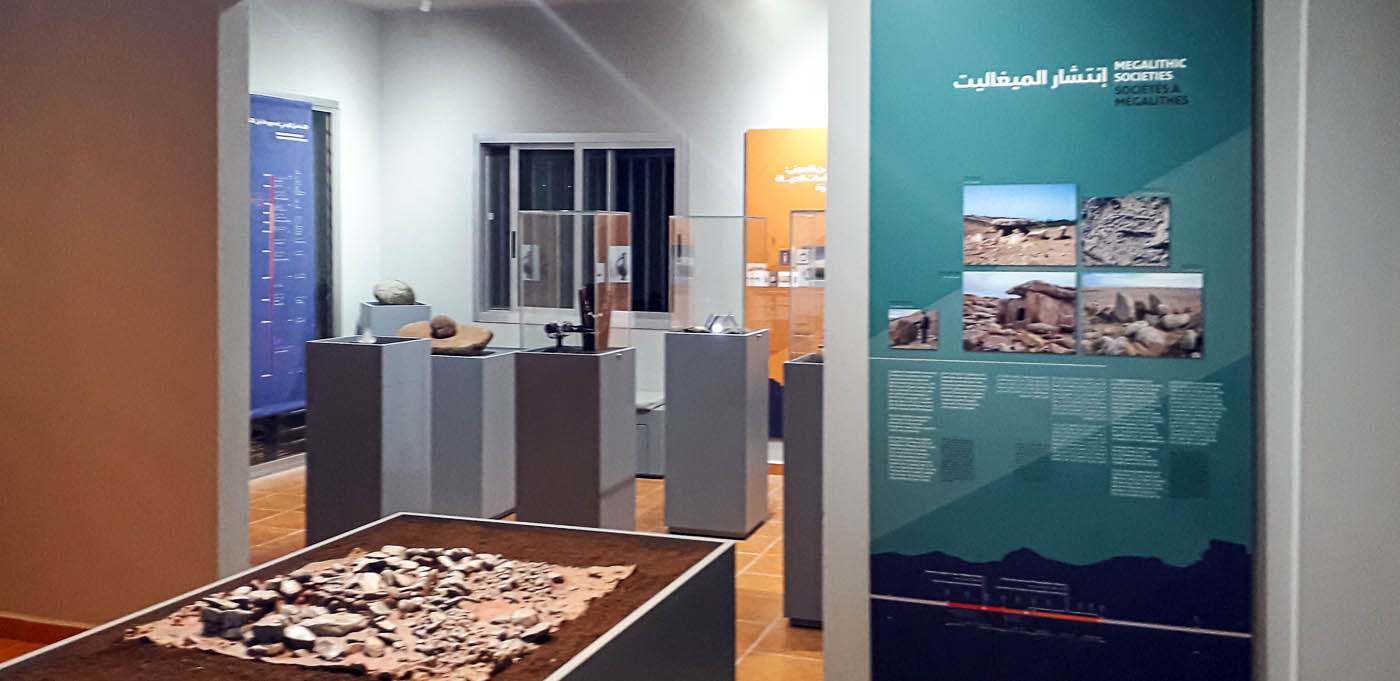
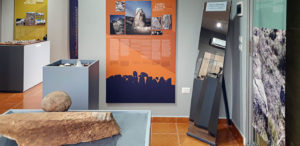
The Heritage House of Menjez presents the exhibition “Memories in the rock, Mankind’s Memories” with an emphasis on prehistoric megaliths. Panels, movies, models and engraved rocks explain how, why and when men built dolmens for their dead. Artefacts discovered in prehistoric monuments are presented to show some activities of daily life of 6,000 years ago (the original artefacts are preserved at the Lebanese Prehistory Museum in Beirut).

Skip image slider
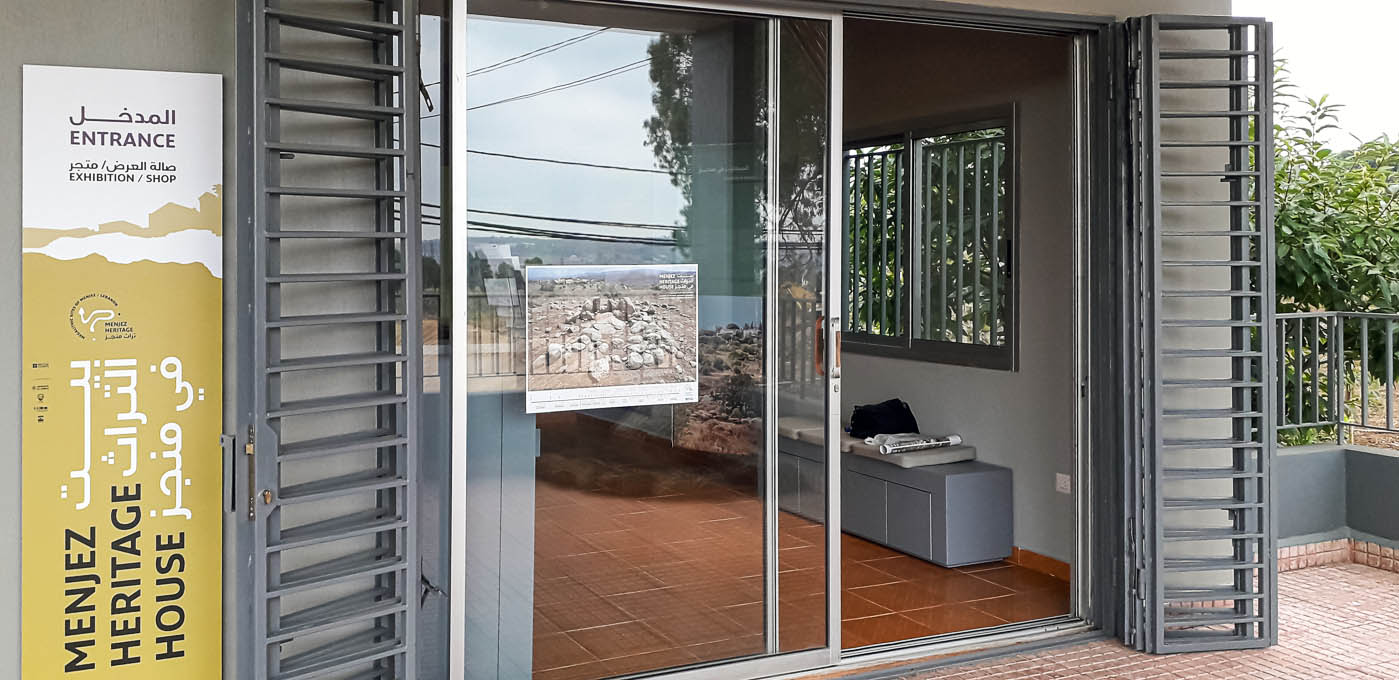
Entrance to Menjez Heritage House and its exhibition
Open doorway leading into the Menjez Heritage House exhibition
Interpretation panels and a dolmen model in the heritage exhibition
Exhibition panels and a model of a dolmen at Menjez Heritage House
Archaeological objects displayed inside Menjez Heritage House
Dolmen model beside an exhibition panel at Menjez Heritage House
Stone artefacts and display cases in the heritage exhibition
Stone artefacts and exhibition panels at Menjez Heritage House
Exhibition room with archaeological objects and interpretation panels
Display cases and interpretation panels inside Menjez Heritage House

Valorization of the Menjez Dolmens

Presentation film of the project of valorization of the megaliths of Menjez. Three other films are screened at Menjez Heritage House:
  • “Menjez before Menjez, mankind within a territory”
  • “Reverend Father Maurice Tallon s.j.’s excavations: 1959-1969”
  • “Dolmens of Menjez, Lebanon”

3D view of Dolmen 11

Film of the restored cover by Yann Bernard (on a Tara Steimer and Florian Cousseau design).

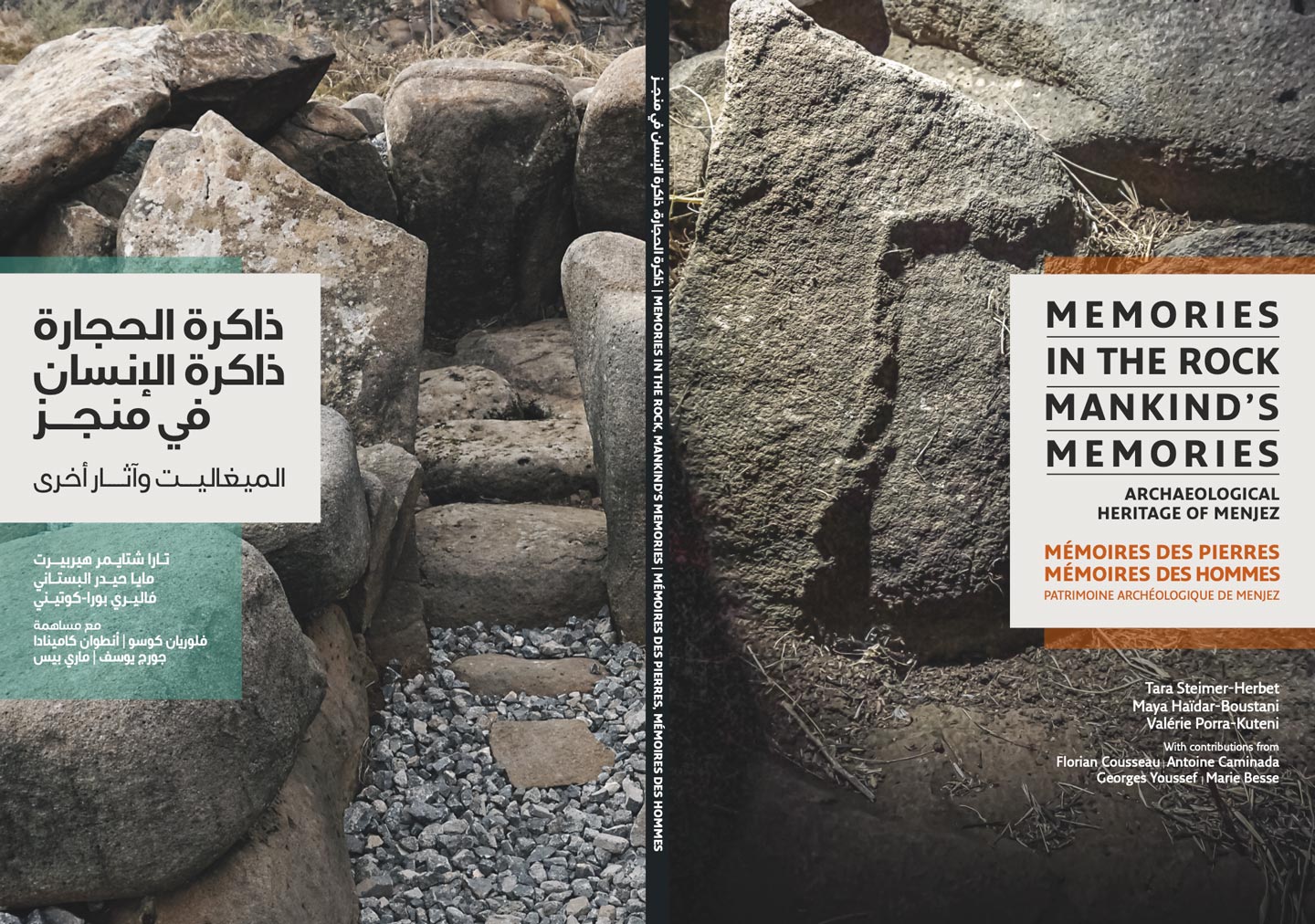
Catalog of the Exhibition

The booklet is on sale at the Menjez Heritage House (10,000 L.L.). This catalog of the exhibition is about dolmens and uses texts of panels with a large number of illustrations and maps (texts in Arabic, English and French in the same book).

Tour of the Dolmens

Discover 11 megalithic monuments of recent Prehistory and the Metal Ages (walking trail), admire the objects offered to the dead, and learn the history of these monuments, built and occupied by ancient societies.

Practical Info

Fares &
Guided Tours

Heritage House entry
  • 3,000 LL /person
Upon reservation
  • Guided Heritage House tour for groups: 5,000 LL /person
  • Guided Heritage House tour & guided walking tour for groups: 8,000 LL /person
  • School workshop & Guided tour of the Heritage House: 5,000 LL /student
School workshop themes
  • Flint engraving on basalt, pottery modeling, fire demonstration, making clay pearls, writing one’s name in Phoenician or Cuneiform alphabet, Shooting with a bow and a spear thrower.

Opening Hours

Menjez Heritage House
  • Sat. & Sun. 10AM – 6PM (Apr. to Oct.)
  • Wed. – Sun. (School Vacation)
  • All year, upon reservation
Discovery Trail
  • Accessible all year, 24/7

Partners & Credits

Initiator

Municipality of Menjez and Georges Youssef (Mayor)

Supervisor

Direction Générale des Antiquités du Liban

Funded by

British Council (Small Grant CPS 552-17)

Study and valorization project directed by

Tara Steimer-Herbet (University de Geneva – Switzerland)

Museum design and production

Valérie Porra-Kuteni (Château-Musée of Bélesta – France) and Tara Steimer-Herbet (University of Geneva)

Production of museum furniture

Okajian (Tripoli – Lebanon)

Graphic Design & Website

FABRIKA (Beirut – Lebanon)

Movies

Zeina Haddad (Beirut – Lebanon)

Drone Views

Directorate General of Antiquities

Scientific supervisor

Tara Steimer-Herbet, Florian Cousseau, Marie Besse (University of Geneva), V. Porra-Kuteni (Mus. Bélesta) et Maya Haïdar-Boustani (Museum of lebanese Prehistory – Beirut)

Carts, reconstitutions and models

V. Porra-Kuteni (Mus. Bélesta) and Thierry Blaise (Bélesta – France)

Ceramics copies

Jean-Marie Giorgio (Rasiguères – France)

British Council
University of Geneva
Saint Joseph University of Beirut
Château-Musée de Bélesta
Municipality of Menjez
Ministry of Culture, Lebanon